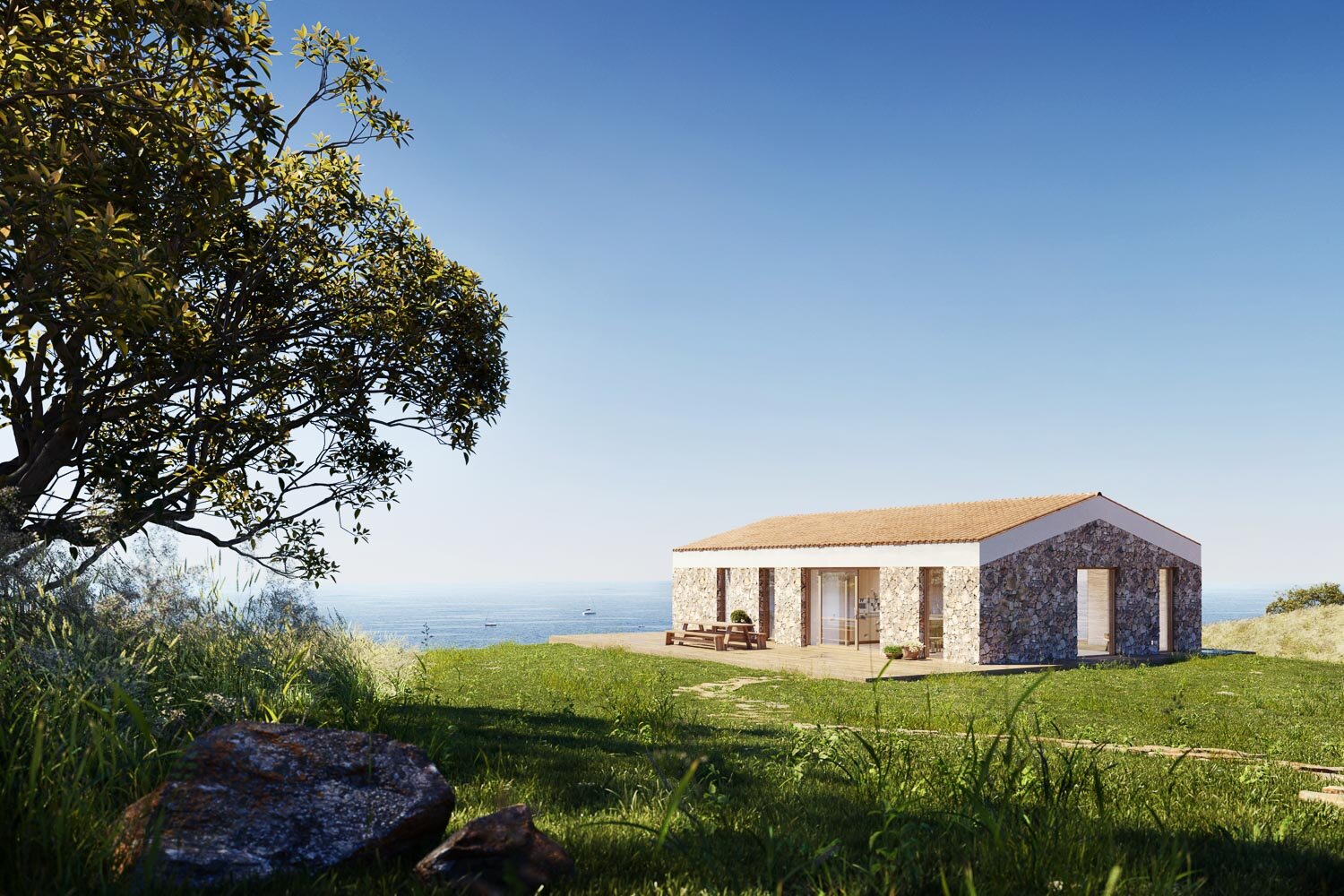
A Healthy House
We design and build sane houses, which are neutral regarding carbon emissions.
Simple. Light. Pure.

Wall Version

T3 (107m2)

A house where all wet areas – kitchen, laundry, and bathrooms – and the technical area are positioned along a technical wall.
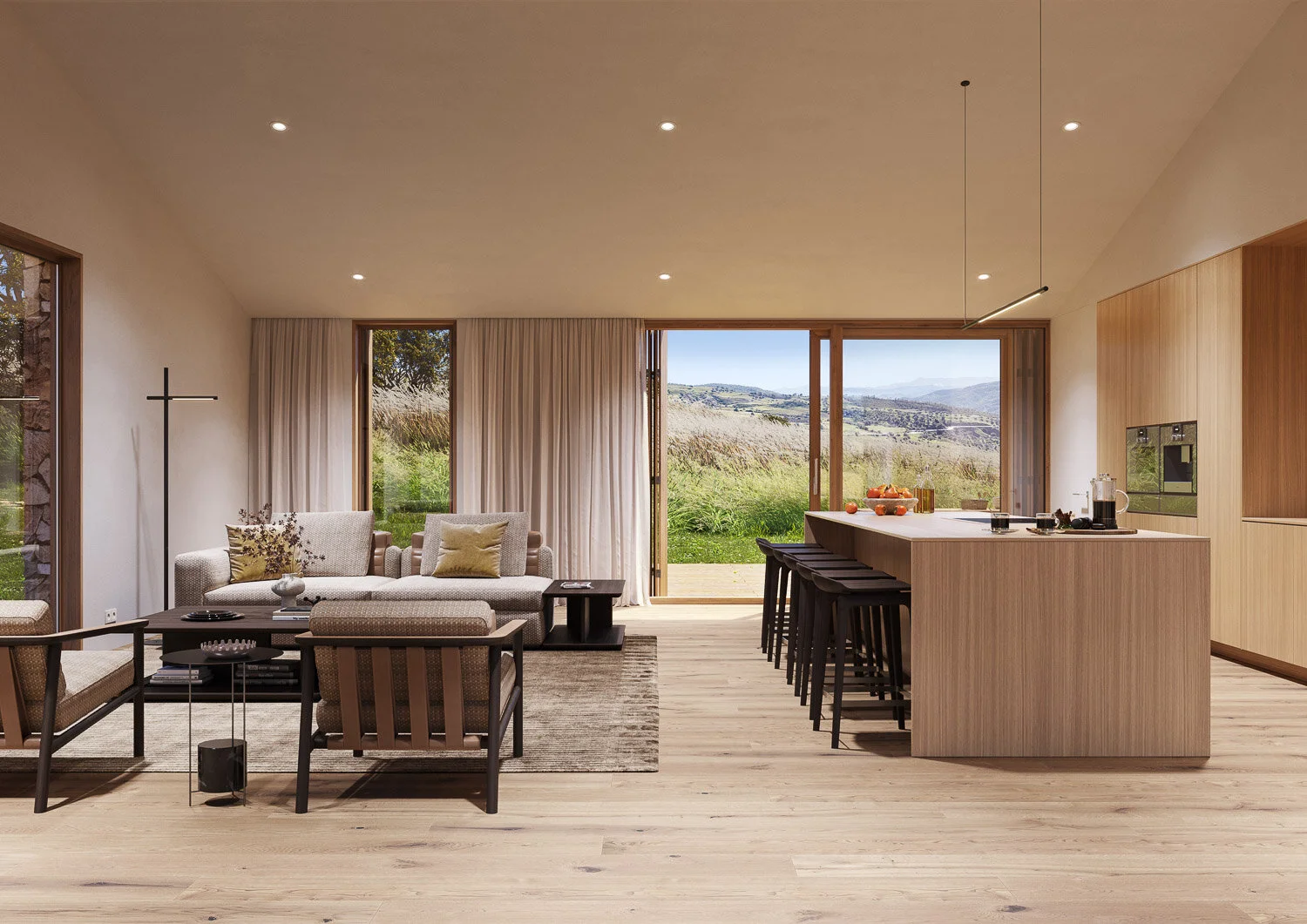
The living room and bedrooms are positioned on open-plan layout, enhancing wide spaces and connecting with the outdoors.
The living room and kitchen, as well as the master suite, have a variable height (2.45m – 3.75m).
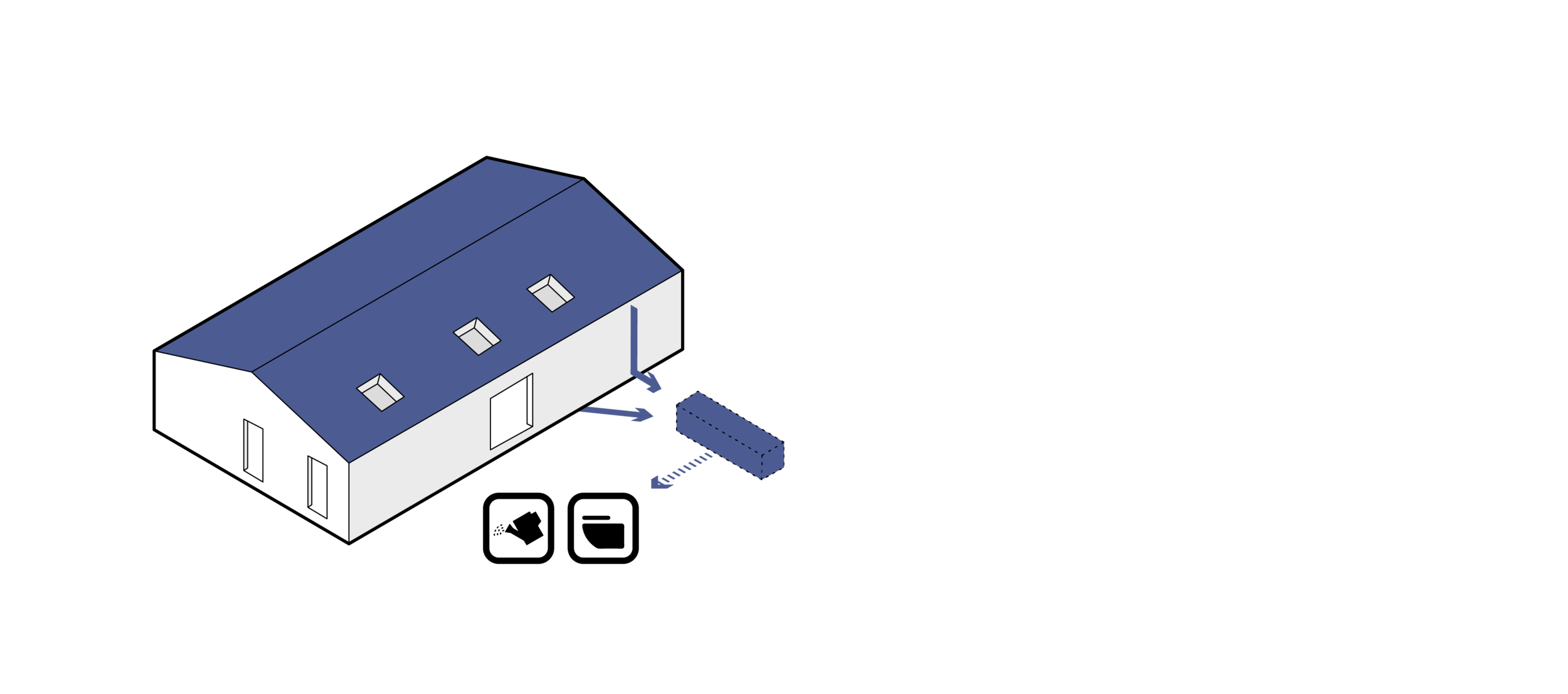
The house extends itself to the exterior through the deck, the green space, the water reservoir, and the biologic swimming pool.

Core Version

T2 (114m2)

In this version, all wet areas – kitchen, laundry, and bathrooms – and the technical area are positioned on a core, which is the ‘brain’ that manages the house itself.
Wide suites grant privacy and quietness.
The living room and kitchen are integrated into a very generous area, with several connections to the outdoors.
It is similar, as a whole, to the wall version (T3), simply having a different typology (T2) but with superior living areas.
Chã House Dimensions

Length 15m
Width 9m
Height (Máx./Min.) 4.35m/2.90m
Gross Area 135m2
Usable Area 107m2 (T3) - 114m2 (T2)
Chã House Components

ROOF
Pitched roof, clad with ceramic tile produced through an environmentally responsible process (for example, recovered and certified tiles).
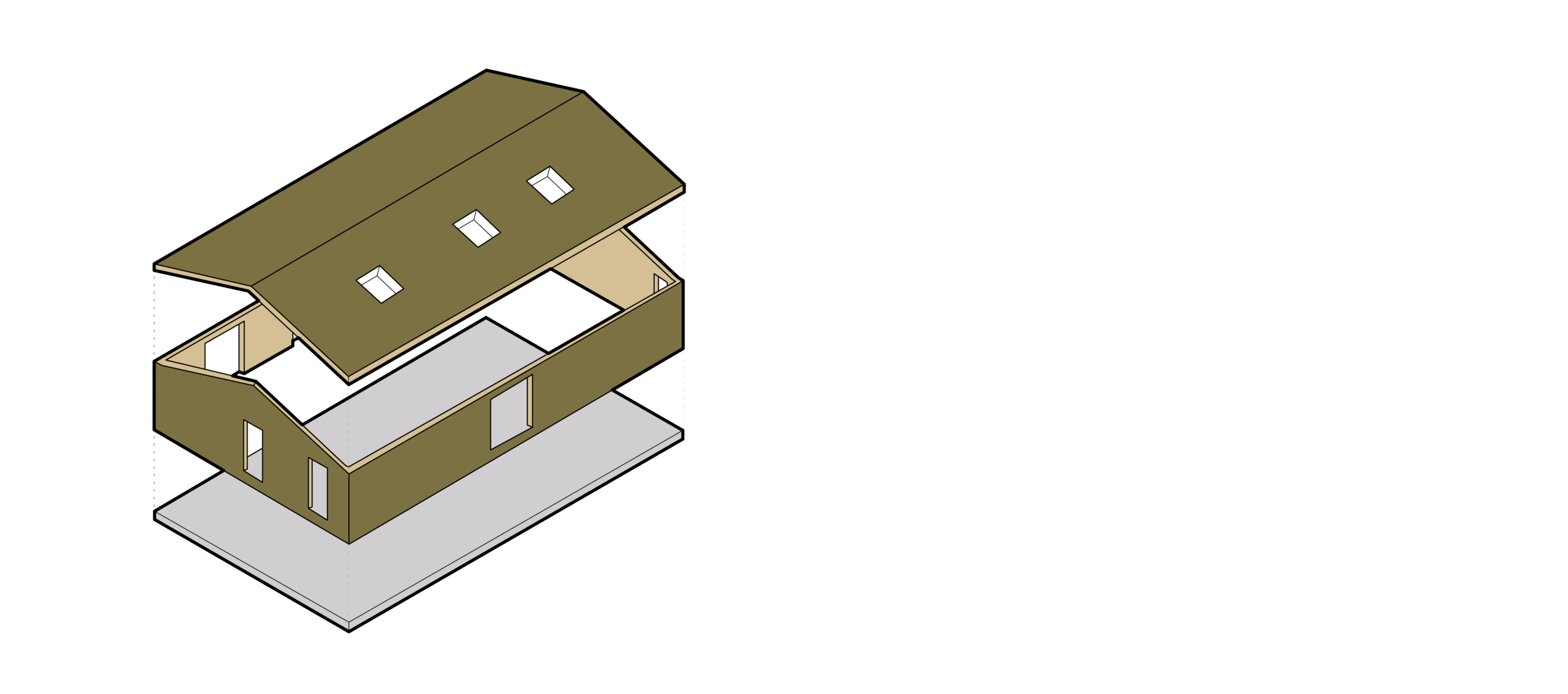
Underneath it, there are two layers of expanded cork agglomerates and CLT (Cross Laminated Timber), which complete the roof system. They represent an excellent thermal barrier between the exterior and interior, helping to preserve the interior temperature constant throughout the year.
TECHNICAL AREA
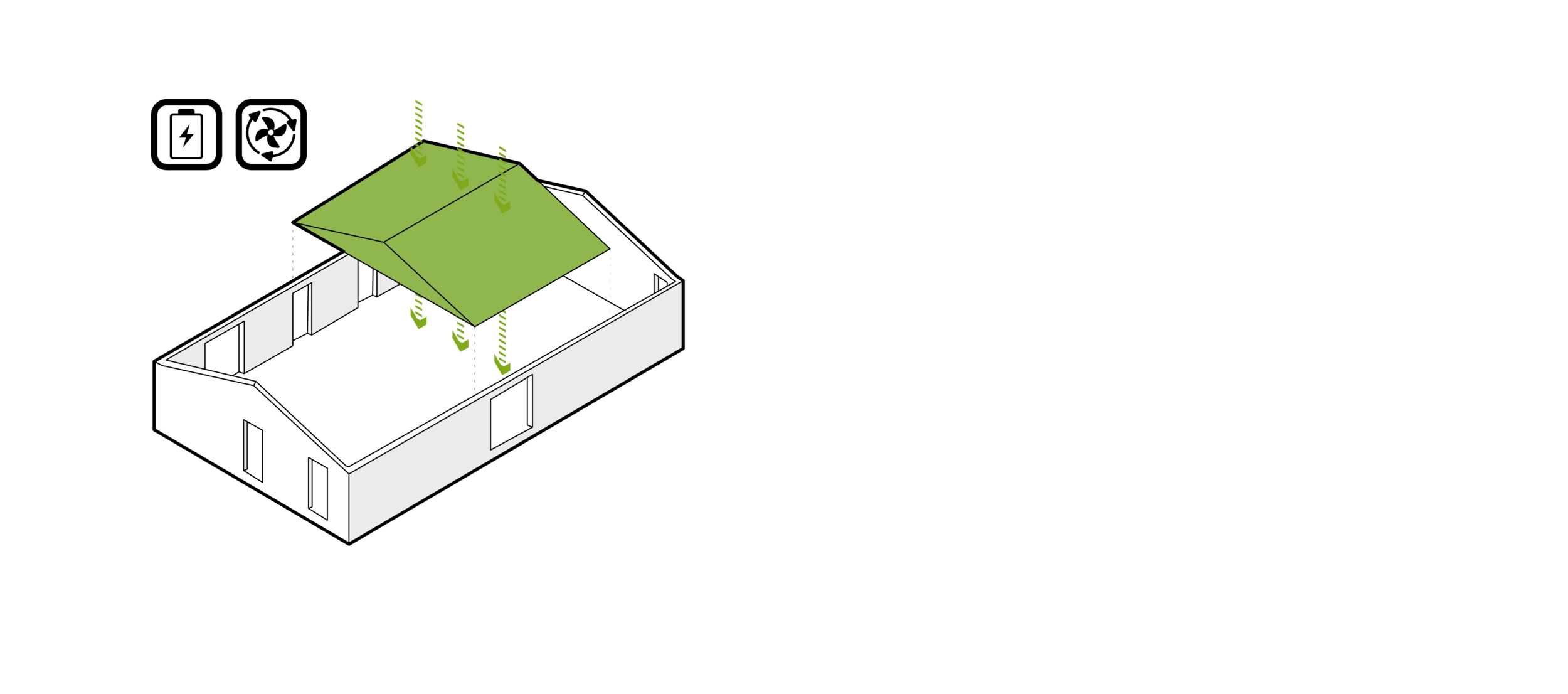
It’s the ‘heart’ of the house, managing air, energy, and water flows. It treats the interior air of the house, stores renewable electrical energy, and communicates with the water deposit in the subsoil.
PASSIVE HOUSING
Composed of two layers of cork and wood (among other components), creating quite a hermetic ‘box’ that prevents temperature and humidity exchanges between exterior and interior. Doors and windows offer high thermal inertia, reducing the need for heating or cooling throughout the year.
FOUNDATIONS
Concrete slabs made of ecologic cement are exclusively used, recovering industrial waste and thus contributing to the reduction of the carbon incorporated in each built house.
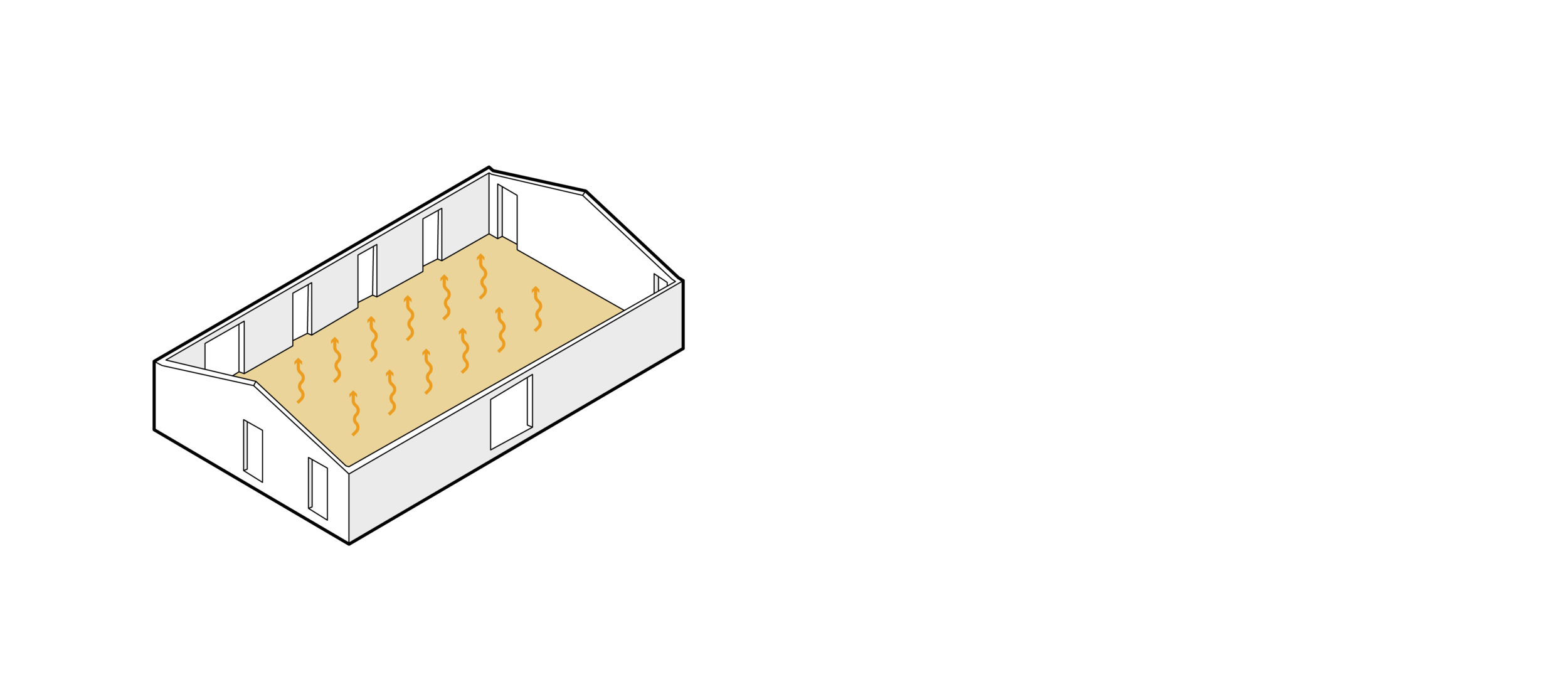
When associated with the floor’s radiant heating system, this material allows a greater dissipation of energy.
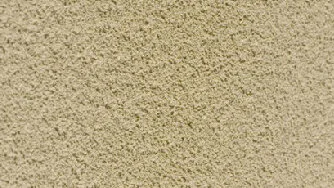
Exterior Finishings
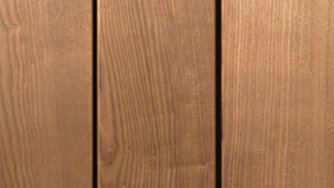

Interior Finishings


CLT + Cork: 8 Advantages

SUSTAINABILITY
Tree release oxygen and store carbon dioxide.

COSTS AND DEADLINES
CLT structures are faster to erect and offer greater cost-efficiency.

CONSTRUCTION RIGOR
Reduced costs and superior quality. Millimetric construction precision.
SPEED
A team of 3 can erect a CLT house in 3 days or a 5-story building in 1 month.

ENERGETIC EFFICIENCY
CLT structures are more water-and-air-tight and insulating when compared to other systems. These structures help preserve the temperature and keep humidity stable for much lower costs.

FIRE RESISTANCE
Wood naturally protects itself from fire, offering resistance superior to that of concrete and steel.

ACOUSTICS AND HUMIDITY
Cork associated with CLT better absorbs external and internal noises. Wood auto-regulates the interior humidity, fighting the presence of viruses and bacteria.
.

SEISMIC RESISTANCE
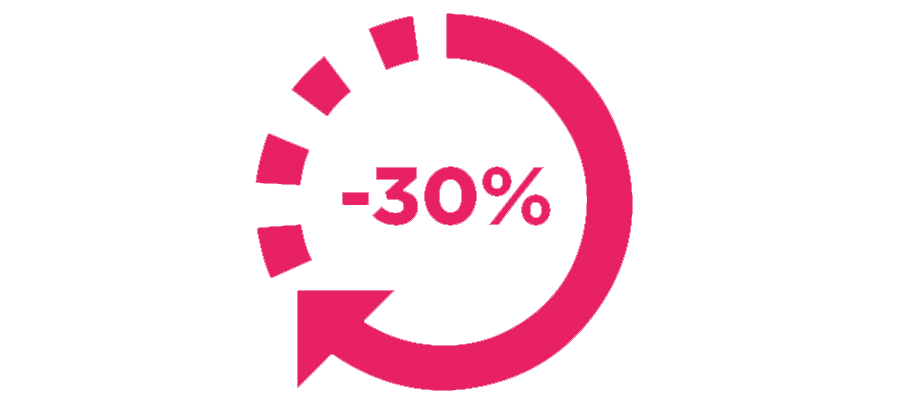
CLT structures are 30% lighter, more resistant to static and dynamic forces caused by earthquakes.
“A Machine for Living in”*
* quote from the architect and theorist Le Corbusier.
Chã House Construction
RECOVERED CERAMIC TILES
CORK ECOLOGICAL INSULATION, STRENGTHENED ON THE EXTERIOR
WATERPROOFING
CLT (CROSS LAMINATED TIMBER) WALL AND ROOF
RADIANT FLOORING MADE OF ECO-CEMENT CONCRETE
ECOLOGICAL INSULATION
ECO-CEMENT CONCRETE FOUNDATIONS
WATERPROOFING
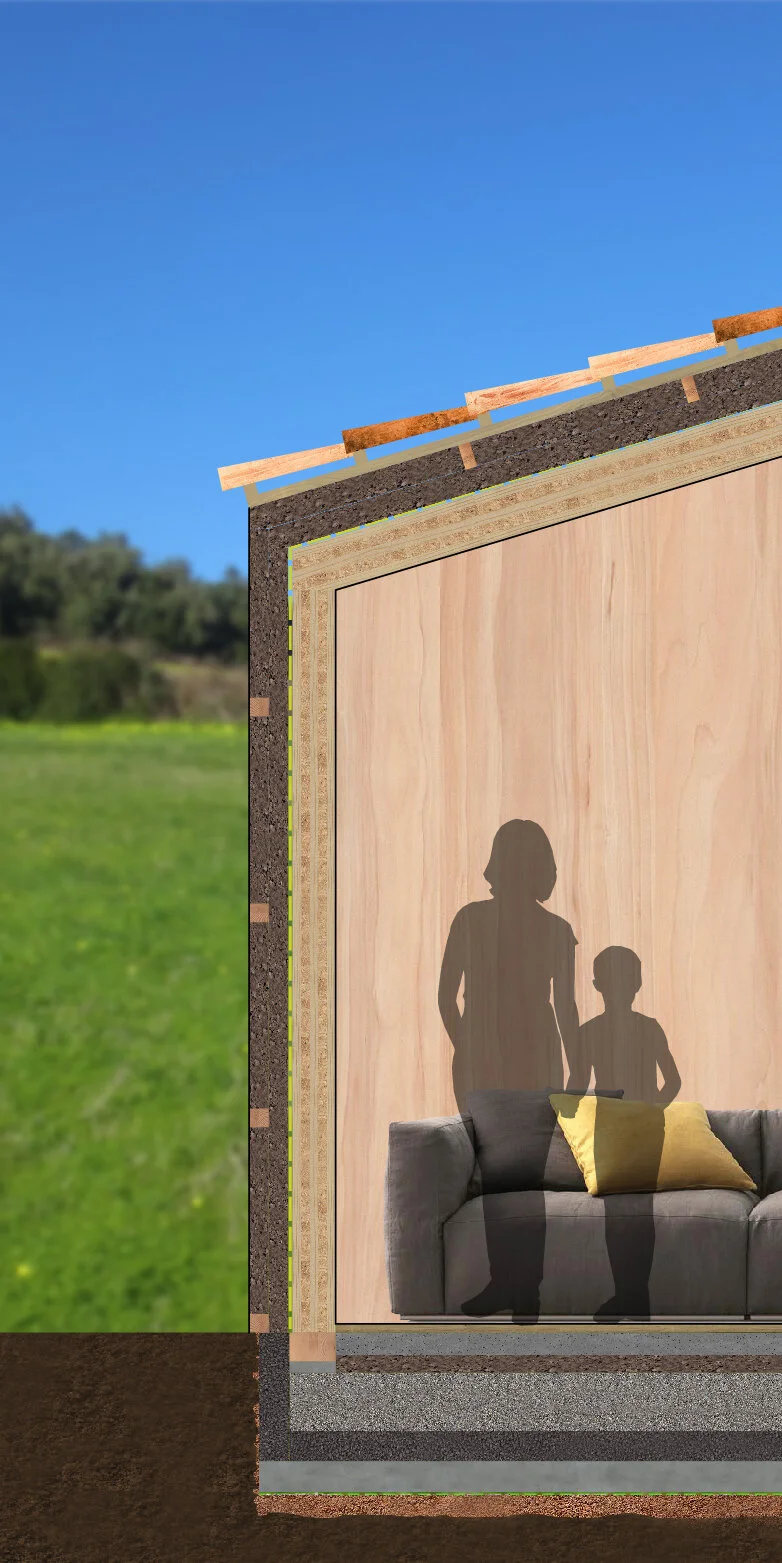
Constructive Scheme